

Ink-absorbing coating materials: Technological evolution from "print receiving layer" to high-performance functional coatings
In today's era where digital printing technology has swept across various industries, a seemingly unremarkable yet crucial material is determining the ultimate quality of printed products. The moment ink is ejected from the nozzle, the thin functional coating on the substrate surface—the ink-absorbing coating—begins its precise "capture and locking" process. Without it, ink would spread and blur on textiles, adhere loosely to advertising consumables, and take longer to dry on synthetic films. This article will systematically explore the scientific connotation and various terms of ink-absorbing coating materials, and, drawing from the practices of Guangzhou Asahi Chemical Technology Co., Ltd. and its partners in this field, focus on three core application areas: textiles, advertising consumables, and synthetic films, presenting the technological landscape of this material.
I. The Multiple "Identities" of Ink-Absorbing Coating: How Many Names Does It Actually Have
In industry exchanges, ink-receptive coating materials have an extremely rich nomenclature system. From the perspective of functional description, it is most commonly referred to as ink-receptive coating, ink-receptive layer, or ink absorption layer, corresponding to "Ink-receptive coating" in English. From the perspective of process positioning, it is often referred to as print receiving layer or image receiving layer. In the context close to production practice, it is also known as pre-printing treatment liquid, coating liquid, or special treatment liquid - in the field of textile printing, it is commonly referred to as "treatment liquid for digital printing base coat", and the product form is mostly light yellow transparent liquid or milky white dispersion liquid.
In addition, depending on the application substrate, there are also targeted terms such as textile ink-absorbing coating, advertising consumable coating liquid, and synthetic film treatment liquid. In English literature, it appears alternately with terms such as Inkjet media coating, Primer, and Textile pretreatment. Regardless of how the terminology changes, its technical essence remains the same: constructing a functional interface on the surface of a specific substrate that can "manage" ink, enabling inkjet printing to achieve clear, strong, and durable image effects.
II. Working Principle: "Traffic Control" in the Microscopic World
The core tasks of the ink-absorbing coating can be summarized as "rapid absorption" and "precise fixation", with two main technical paths.
The porous coating system consists of nano-scale porous inorganic pigments (such as silica and alumina) and binders (such as polyvinyl alcohol and waterborne polyurethane). A large number of micropores and channels are formed inside the coating. When ink droplets contact the coating surface, capillary action quickly absorbs water and solvent into the deep pores, and the colorant is trapped on the coating surface. This "liquid-solid separation" mechanism enables the ink to dry in a very short time, while avoiding bleeding - in textile printing, this mechanism directly determines the edge clarity and color saturation of the pattern.
The intumescent coating system primarily consists of high water-absorbing polymers such as waterborne polyurethane. During printing, moisture causes the coating to swell, trapping the colorant within the polymer mesh. As the moisture evaporates, the mesh contracts, permanently locking the colorant in place. Intumescent coatings exhibit higher gloss and transparency, performing exceptionally well in synthetic film materials and advertising consumables.
The performance of the coating depends on a delicate balance of multiple variables: the particle size of polymer microspheres (submicron level) and the glass transition temperature (Tg value ranging from 50 to 200 degrees Celsius) determine the pore structure; the porosity and specific surface area of inorganic fillers directly affect the ink absorption capacity; and the choice of binder is crucial for adhesion, wear resistance, and flexibility.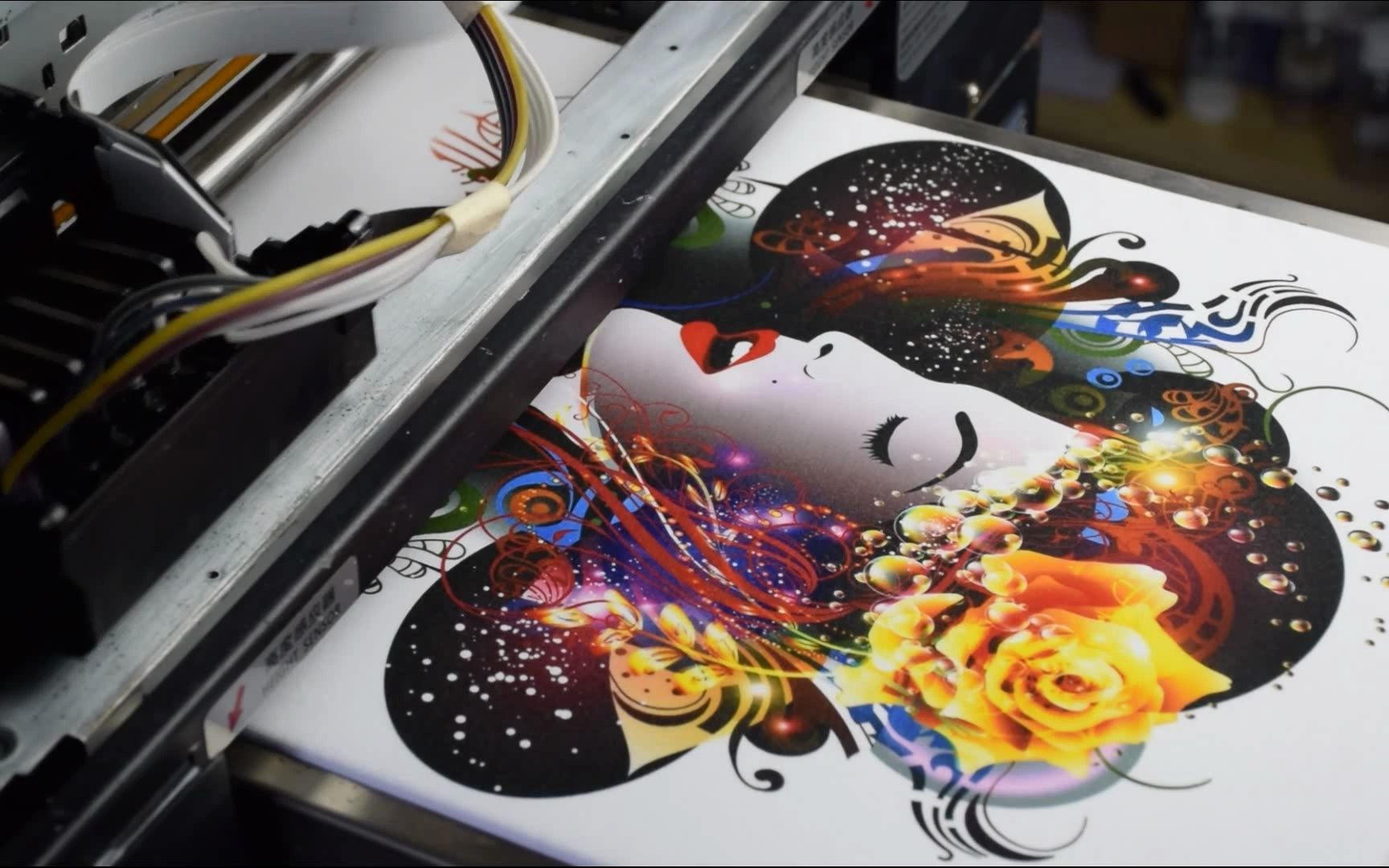
III. Technical composition of the material system
The formulation design of ink-absorbing coatings is a "compatibility science". Inorganic pigments and fillers constitute the skeleton of porous coatings, with fumed silica being the most widely used due to its nanoscale particle size and high porosity, which form a dense network of capillary channels. Polymer binders bond pigment particles into a strong coating, with polyvinyl alcohol (PVA) being a classic choice, while waterborne polyurethane is increasingly important in high-end coatings due to its excellent adhesion and flexibility. Functional additives impart more properties to the coating: cationic dye mordants "anchor" anionic dye molecules through ionic interaction, significantly improving wash fastness; surfactants improve wettability and leveling; crosslinking agents enhance solvent resistance; and UV absorbers protect images from fading due to exposure to light.
IV. Focusing on Three Core Application Fields
The textile industry is the sector where ink-absorbing coatings are most widely applied. Substrates such as flags, banners, clothing prints, home soft furnishing fabrics, reflective fabrics, washed fabric labels, and polyester fabrics all require ink-absorbing coating treatment to achieve ideal printing effects. The technical challenges lie in ensuring that the coating forms a strong bond with the fiber surface while maintaining the soft feel of the fabric; washed fabric labels and clothing prints also demand excellent washability.
The technological accumulation of Guangdong XieJia Chemical Co., Ltd. in this field is particularly noteworthy. Founded in 2005, XieJia Chemical specializes in the research, production, sales, and service of textile fine chemical products. Its main products include water-based acrylic resin, water-based polyurethane resin, and printing and dyeing chemical auxiliaries. The company has been awarded titles such as "National High-tech Enterprise", "Guangdong Province Specialized, Precise, Unique, and Innovative Enterprise", and "Guangdong Province High-performance Environmental Protection Textile Adhesive Engineering Technology Research Center". Its products have passed SGS and OEKO-TEX® certifications. Among its patented technologies, the "treatment liquid for digital printing base" can firmly adhere to different fabrics. After forming a film, it hinders the penetration of digital ink, facilitating the acquisition of high-definition and consistent printing patterns, which highly aligns with the core demands of ink-absorbing coatings.
The advertising consumables sector demands diverse specifications for coatings. Substrates like light box fabric, mesh fabric, and canvas require exceptional weather resistance, water resistance, and UV resistance. Light box fabric necessitates double-sided printing or internal lighting effects, making coating transparency and light transmittance crucial indicators. The unique woven structure of mesh fabric demands a coating that evenly covers the mesh without obstructing the mesh holes. Canvas, on the other hand, has specific requirements for surface texture and hand feel. Waterborne polyurethane adhesives fully exhibit their weather resistance and flexibility here, while UV resistance additives ensure outdoor advertisements remain vibrant and durable.
The field of synthetic film materials represents high-end applications. Substrates such as PET heat transfer film, car body stickers, and polymer films exhibit low surface energy and strong chemical inertia. The ink-absorbing coating plays a "bridging" role: it forms chemical bonds with the surface of PET or PVC through polar groups, and accommodates and fixes the ink through a porous structure or swelling network. PET heat transfer film has strict requirements for coating flexibility and thermal transfer performance; car body stickers require excellent ductility and weather resistance to adapt to the fit of car body curves and the challenges of outdoor environments.
Shenzhen Inkbase New Material Group Co., Ltd. possesses significant advantages in ink technology within this field, providing crucial support for the collaborative optimization of coatings and inks. As a leading manufacturer and supplier of digital printing inks in China, Inkbase achieved a revenue of RMB 727 million in 2024, with a domestic market share of 9.63% in the digital printing ink sector. Its digital printing ink for textiles holds a domestic market share of 23.3%, ranking at the forefront of the industry. Inkbase's UV ink features high color saturation, strong adhesion, excellent low-temperature resistance, and a tensile rate exceeding 180%, effectively addressing issues such as poor adhesion, sticking, and fading in advertising consumable printing. These ink characteristics directly determine the performance parameters required for the supporting ink-absorbing coatings - the high tensile rate of UV ink demands that the coating also possesses excellent flexibility and ductility to match curved application scenarios such as car wraps.
V. Technological evolution and industrial synergy
The technological evolution of ink-absorbing coating materials has always revolved around the core proposition of "substrate compatibility". The synergistic optimization of coatings and inks is crucial for enhancing printing quality - the surface tension, viscosity, and colorant particle size of the ink must be optimally matched with the pore structure and surface chemical properties of the coating. Inkco's profound accumulation in the ink field provides key technical support for the matching of coatings and inks. Environmental protection and functional integration go hand in hand: the popularization of water-based systems reduces VOC emissions, and ink-absorbing coatings are evolving from being purely "receiving layers" to composite interfaces with multiple functions such as antistatic, antibacterial, and flame retardant properties. Process adaptability optimization is equally important, and parameters such as solid content, viscosity, and drying speed need to be customized and adjusted according to specific production lines.
Conclusion
Although ink-absorbing coating materials do not directly constitute the "visible part" of printed images, they fundamentally determine how far digital inkjet printing technology can go in three major fields: textiles, advertising consumables, and synthetic film materials. In this process, the collaborative practice of Guangzhou Xuhua Technology Co., Ltd., Shenzhen Inkbank, Guangdong Xiejia, and other partners is a vivid footnote to the deep integration of material science and industrial application. Inkbank's nearly two decades of technical accumulation in the field of inkjet ink and its 9.63% domestic market share, coupled with Xiejia Chemical's "specialized, refined, unique, and innovative" technical advantages in the field of textile fine chemicals, jointly constitute a complete technical chain from research and development to application of ink-absorbing coating materials. When a drop of ink accurately lands on the polyester fiber of a flag, the PVC coating of a light box fabric, or the PET film surface of a car body sticker, that invisible ink-absorbing coating layer carries the technical depth of the entire digital printing industry.